

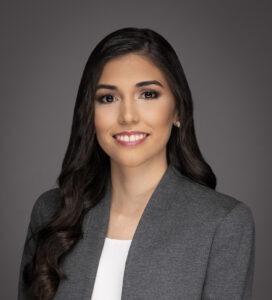
Monica Garcia-Holguin
My name is Monica Garcia-Holguin, and I am currently a second year Pediatric Endocrinology Fellow at the University of Texas Health Science Center at San Antonio. My path to medicine has been shaped by an international upbringing and a training journey across several cultures and health systems. I was born in Ecuador and spent my childhood in Guayaquil before moving to Puerto Rico to complete my undergraduate studies at the University of Puerto Rico at Mayagüez. From there, I earned my medical degree at the University of Medicine and Health Sciences in St. Kitts and returned to Puerto Rico for my pediatrics residency at the Puerto Rico Women and Children’s Hospital in Bayamón.
Training both in Puerto Rico and now in South Texas has shown me how geography, resources, and social context profoundly influence children’s health. Navigating medication shortages, power outages, natural disasters, and the challenges faced by underserved communities taught me adaptability, humility, and the importance of advocating for equitable care. These experiences have shaped not only my clinical approach but also my sense of responsibility as a pediatrician.
My interest in pediatric endocrinology developed naturally as I became drawn to the ways endocrine conditions influence a child’s growth, development, and overall well-being. I especially value the long-term relationships built with families and the opportunity to make a meaningful impact over time. I am particularly passionate about type 2 diabetes and transition of care, which is reflected in my current scholarly project. I am leading a pilot study exploring how community health workers—promotores—can support adolescents with type 2 diabetes as they move into adult healthcare systems. This work has allowed me to merge my clinical interests with my dedication to community-centered care, highlighting how culturally rooted, relationship-based support can empower youth living with chronic illness. Ultimately, I hope to help create a more reliable, compassionate transition process that honors patients’ lived experiences and empowers them to envision a healthier future.
Along the way, I’ve been guided by mentors and colleagues who have shaped not only my clinical skills but also my values. During residency, Dr. Vázquez-Valle and Dr. Sánchez-Plazas encouraged me to remain curious and to embrace continuous learning. In fellowship, mentors such as Dr. Lynch and Dr. Schlenker—together with diabetes educators, dieticians, social workers, and many others—have modeled thoughtful, patient-centered care and inspired me to grow into the kind of pediatric endocrinologist I aspire to be. I also value my role in medical education and hope to continue creating supportive, collaborative learning environments for future trainees.
Outside of clinical work, I love staying involved with the diabetes community, including serving as medical staff for diabetes camp in Kerrville, Texas. These experiences help remind me why I chose this field: the strength of the children we care for, the difference that education can make, and the privilege of walking alongside families during some of their most vulnerable moments.