

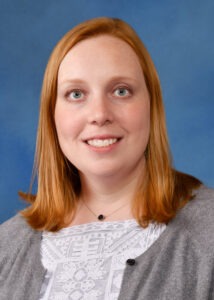
Catherine Corey, MD
I am a Pediatric Endocrinology Fellow in the Division of Endocrinology and Diabetes at UPMC Children’s Hospital of Pittsburgh in the Pediatric Scientist Development Program (PedSDP), and a T32 Postdoctoral Scholar in the Division of Endocrinology and Metabolism at the University of Pittsburgh. My decision to pursue a career as a physician-scientist grew from a desire to improve the quality of life and long-term health outcomes for children and adolescents with chronic endocrine disorders, particularly type 1 diabetes (T1D).
My path began at a lab bench at the University of Pittsburgh Drug Discovery Institute, where I built a strong foundation in scientific inquiry and eventually served as lab manager. I later joined the Pittsburgh Heart, Lung, and Blood Vascular Medicine Institute, and while that experience deepened my skills in basic research, it also clarified what I was missing: a direct connection between the questions I was asking and the patients who stood to benefit from the answers.
That realization led me to medicine as a non-traditional student. Through extensive shadowing of a pediatric endocrinology physician-scientist, I witnessed firsthand the relentless burden chronic illness places on children and their families, and I became certain I wanted a career that united patient care with research capable of changing clinical practice. I earned an MPH in Epidemiology from the University of Pittsburgh, and during medical school (also at Pitt) I began collaborating with one of my current mentors, Dr. Ingrid Libman, on a project examining the prevalence of retinopathy in individuals with T1D and whether improved access to care increases adherence to recommended screening guidelines.
From medical school, I applied to the PedSDP combined residency-fellowship physician-scientist program at Children’s Hospital of Pittsburgh (CHP), which allowed me to continue working with Dr. Libman throughout both residency and fellowship. Those years reinforced my commitment to centering my research on pediatric T1D, and specifically on the practical barriers that drive preventable complications, ultimately leading me to my current focus: bone health in T1D.
My research interests focus on bone health in adolescents with type 1 diabetes (T1D), with an emphasis on bone marrow adipose tissue (BMAT), its role in the bone microenvironment, and potential mediating factors, under the mentorship of Drs. Ingrid Libman and Pouneh Fazeli. My clinical interests are broad and include neuroendocrinology and pituitary, adrenal pathologies, bone health, and the endocrine late effects after cancer treatment.
Prior to entering medical school, I had the privilege of leading a group of young adults on a mission trip to Portland, Maine. One of the high school students, an individual with type 1 diabetes, became ill and after further conversation, disclosed she had not given herself any insulin that day because she did not want to inject herself in front of her peers. She wanted a day free of diabetes. That interaction left an imprint on my young self that remains more than fifteen years later as I seek to align with youth with T1D who do not have a day free from diabetes.
One minute into my first conversation with Dr. Sara McIntire, just three weeks into medical school, I knew I had found a kindred spirit. She inspired my clinical curiosity, taught me to see each child as a wholly unique individual, and demonstrated what advocacy for your patients looks like, thus instilling in me a deep love of pediatrics. She also reminds me, continually, that mentorship extends far beyond career guidance. She has cared for me as a person, supporting me through the challenges of both life and medical training.
Dr. Ingrid Libman first came to my attention through my graduate advisor in epidemiology, who happened to have a daughter with T1D and believed Dr. Libman would be the ideal mentor to guide me toward a career as a pediatric endocrine physician-scientist. She was right. Nearly ten years later, Dr. Libman remains not only one of my most valued mentors, but a living example of what it means to continually strive for better on behalf of our patients: to keep learning, teaching, and exploring so that our contributions leave the field meaningfully changed.