


Dear Colleagues:
January marked the start of a new year and our winter Board of Directors meeting, where we also convened with our Mission Alliance Partners (MAP). Following a team‑building activity constructing bee hives for donation to the DC Beekeepers Alliance 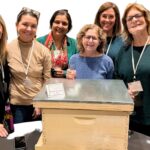 , a non‑profit dedicated to honey bee health and beekeeper education, we met with our MAP colleagues to discuss our needs and their priorities. They expressed strong enthusiasm for our mission and a shared interest in collaborating on workforce and education initiatives. A list of MAP organizations is available at: https://pedsendo.org/about-pes/mission-alliance-partners-copy/
I would also like to bring your attention to two important matters that emerged this month:
1. NIHBiosketchand Other Support Changes
Effective January 25, 2026, the NIH will transition to new Common Forms for the Biosketch and Other Support documents. All senior and key personnel in grant applications and progress reports will be required to use these forms. To do so, individuals must have both a SciENcv account and an ORCID iD, and must generate the forms using SciENcv. In addition, senior and key personnel submitting NIH proposals or holding NIH awards must certify completion of NIH‑compliant Research Security Training. PES is preparing a cheat sheet sharing more detailed guidance, to be available soon.
2. Proposed CMS Regulations on Care for Transgender Youth
The U.S. Department of Health and Human Services (HHS), through the Centers for Medicare & Medicaid Services (CMS), recently issued two proposed regulations related to medical care for transgender youth. These proposed rules are open for public comment until 5:00 PM ET on February 17, 2026. PES distributed a separate communication on 1/26/25 with additional information and instructions for those who wish to submit comments.
Advocacy continues to be essential across many issues, both within and beyond endocrinology, from civil rights to immunization policy. For another opportunity, please see information below on the virtual “Going to the Hill” Day. As Martin Luther King, Jr., whose birthday was on January 15th, reminded us, “The time is always right to do what is right.” 
Laurie E. Cohen, MD
A Non-Branded NADF Video about Injecting Hydrocortisone
This video "stars" a young man who has adrenal insufficiency and is a nurse. https://www.youtube.com/watch?v=oqEtKhnL_Us
An Invitation from the Endocrine Society
Calling Endocrine Society Scientists: Join Our Virtual Hill Day on Friday, March 13
After an exceptionally challenging year for the research community, one thing is clear: it will take all of us to work together to protect NIH and increase funding for endocrine research. Policymakers need to hear directly from you, their constituents, about the real-world impact of federal investment in science—and your voice has never been more important.
The Endocrine Society is inviting you to participate in a Virtual Hill Day on Friday, March 13, focused on funding for NIH, and we are looking for member researchers who are willing to participate. This is a meaningful opportunity to advocate for sustained, robust NIH funding and to help ensure the future of biomedical research.
What participation involves:
- Taking part in a virtual Hill Day on March 13, with up to three 30-minute meetings scheduled throughout the day from 9am to 5pm EST.
- Attending a one-hour virtual training call prior to the Hill Day to prepare you with background, messaging, and logistics (multiple dates and times will be provided)
- Sharing your perspective as a researcher on why NIH funding matters—for your science, your trainees, or for public health.
The Endocrine Society will schedule virtual meetings (Zoom) for you with the appropriate congressional offices and provide training, talking points, and background materials.
We know how demanding this past year has been, and we truly appreciate the time and energy required to engage in advocacy. Our goal is to maximize the number of participants and, consequently, our impact by organizing virtual meetings instead of bringing members to Washington, DC. From experience, we know that these virtual meetings will have impact and lead to support for endocrine research and NIH.
If you are interested in participating—please let us know by filling out the interest form no later than February 2. The information you provide in the form will only be used to ensure that we match you with the correct representatives. We hope you’ll consider lending your expertise and experience to this important effort. If you have any questions about participation, please reach out to advocacy@endocrine.org and a member of our team will get back to you.
Thank you for considering this request. We hope to work with you on this important effort.
Looking for members in the following states: West Virginia, Louisiana, Mississippi, South Carolina, Kansas, Arkansas, Alabama, Oklahoma, South Dakota, Washington, Illinois, Rhode Island, New Hampshire, Oregon, Hawaii, Wisconsin, and Connecticut
Online Education
Plan your professional development in the new year now! Click here to access the events Calendar and register for the many education webinars we host: Events for February 2026 – Pediatric Endocrine Society
State of the Art: Obesity SIG & HSD Committee
Tuesday, February 3 I 12:00-1:00 PM ET
State of the Art: Turner Syndrome SIG: Prenatal Counseling for Turner Syndrome
Thursday, February 5 I 6:00-7:00 PM ET
State of the Art: Bone and Mineral SIG: New, Disruptive Precision Therapies for Achondroplasia: Changing the Rules of the Game
Monday, February 9 I 4:00-5:00 PM ET
SEED Webinar: Calcium Pathophysiology/Management
SEED is a novel interactive session series that aims to enhance clinical learning for medical students and increase their exposure to pediatric endocrinology.
Wednesday, February 11 I 12:00-1:00 PM ET
State of the Art: Ethics SIG Beyond the Algorithm: Ethical AI in Pediatric Endocrinology
Wednesday, February 11 I 4:00 - 5:00 PM ET
State of the Art: DSD SIG: Gonadal Management in DSD
Wednesday, February 18 I 1:00-2:00 PM ET
State of the Art: Thyroid SIG: Pediatric Thyroid Ultrasound - 3-part Series: Part 1- Normal Thyroid Ultrasound
Thursday, February 26, 2026, 5-6pET
Industry Sponsored Symposium
Exploring Innovative Pathways for Congenital Hyperinsulinism Treatment Pioneering Pathways to Better Health
Wednesday, February 11, 2026 I 10:30-11:30 AM ET
Developed through a strategic collaboration between CHI, PENS and Medscape Education Supported by an independent educational grant from Zealand Pharma A/S.
Congenital hyperinsulinemia (CHI) is a complex and serious disorder that most often appears in newborns and young infants as prolonged, often severe, hypoglycemia. When diagnosis or treatment is delayed or inadequate, infants face a real risk of irreversible neurological damage, therefore, timely recognition and prompt intervention are essential.
Current medical and surgical options are limited, leaving many families with few effective choices. New therapies on the horizon may change that landscape — offering options for easier administration, less frequent dosing, improved tolerability, and with a promise of reduced frequency and duration of hypoglycemia.
Join our live webinar where leading experts will confront the critical gaps in CHI care, review real patient cases and outcomes, and evaluate both established treatments and emerging therapies. You’ll gain practical, evidence-based insights to improve early detection, optimize management, and better support families affected by this challenging disease.
CME/CNE is available.
Moderator: Julie Raskin, Chief Executive Officer, Congenital Hyperinsulinism International, Glen Ridge, New Jersey
Speakers:
- Diva D. De Leon Crutchlow, MD, MSCE, Professor of Pediatrics (Endocrinology and Diabetes), Children’s Hospital of Philadelphia, Philadelphia, Pennsylvania
- Paul S. Thornton, MD, Division Chief, Endocrinology and Diabetes, Cook Children’s Medical Center, Fort Worth, Texas
Health Systems Disparity Spotlight: Recognizing American Heart Month in February
Submitted by Andrew Kanouse, MD
Health Systems Disparity Initiative - Pediatric Endocrine Society
Fellow Spotlight: Sydney Look, MD
APP Spotlight: John Weidinger
Historical Tidbit January - Then and Now: This Month in Endocrine History
Submitted by Evan Graber, DO